





NE ARIYORSUN?
Modern industrial and municipal fluid systems demand reliable components capable of both on‑off isolation and precise flow modulation. Among quarter‑turn valve solutions, butterfly valves stand out for compact footprint, cost‑effectiveness, and proven flow‑regulating performance across large‑diameter pipelines. While many users associate butterfly valves only with simple shut‑off service, properly specified butterfly valves can deliver stable throttling for liquid, gas, and low‑abrasion media. This article explains exactly how butterfly valves regulate flow, their control characteristics, suitable operating ranges, actuator matching, and real‑world limitations within modern process systems.
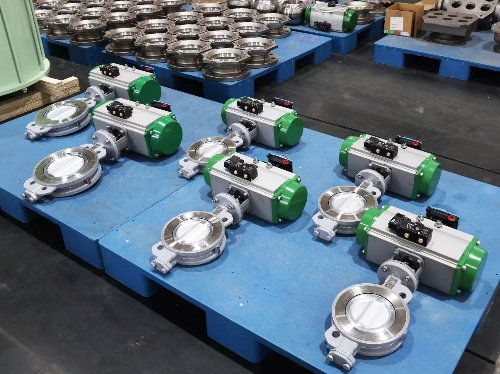
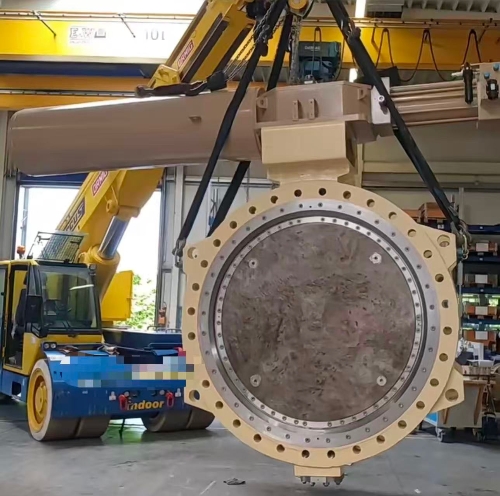
A butterfly valve controls flow by rotating a circular disc inside the pipe bore. The disc pivots around a central shaft connected to manual, pneumatic, or electric actuation. When the disc sits parallel to the pipeline axis, the valve opens fully for maximum flow capacity. As the disc rotates toward the closed position, it blocks part of the flow passage, creating variable flow resistance that modulates media velocity and volumetric flow rate. At 90‑degree rotation, the disc sits perpendicular to flow to achieve shut‑off.
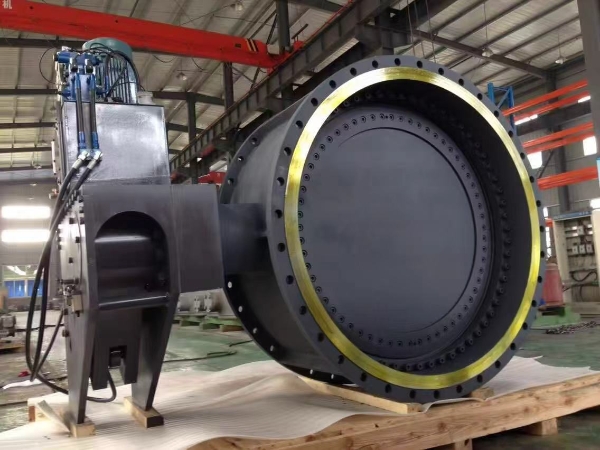
Unlike ball valves which offer near‑unobstructed full‑bore flow, the butterfly disc always remains inside the flow path even at full opening. This inherent obstruction generates pressure drop, which becomes the key physical basis for throttling and flow regulation.
Most standard butterfly valves follow a modified equal‑percentage flow characteristic. Small angular adjustments in the mid‑travel range produce relatively large changes in flow volume. This means best throttling performance generally occurs between 20 % and 70 % of disc opening. Operating close to full‑closed or near‑full‑open positions reduces regulation accuracy: near‑closed positions risk cavitation and high velocity erosion; near‑full‑open positions yield minimal flow change even with substantial disc rotation.
For demanding control loops, custom profiled discs can adjust flow curves to match linear process requirements, improving stability for continuous flow‑modulation applications.
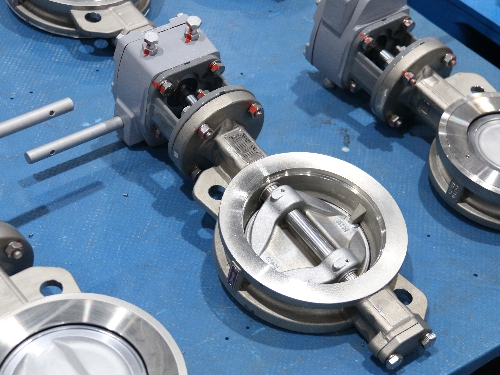
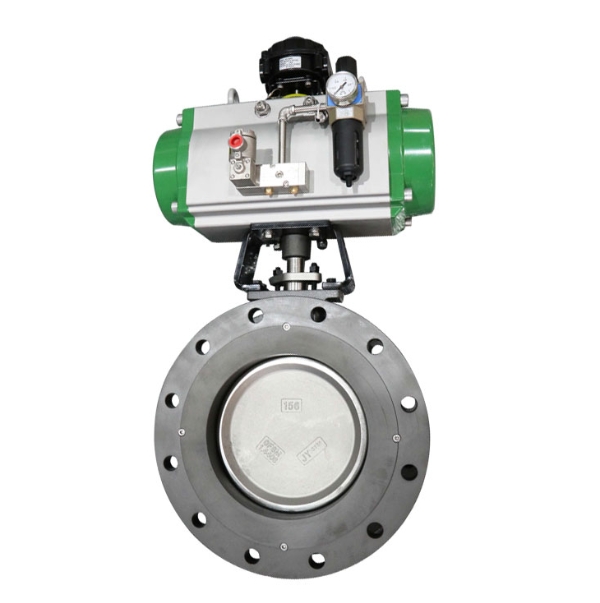
Good throttling results depend not only on the valve body design but also on compatible actuation:
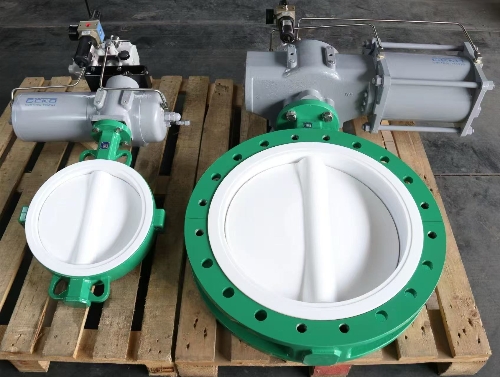
Without a dedicated positioner, even high‑quality butterfly valves cannot maintain stable set‑point flow under variable upstream‑pressure conditions.
Engineers should understand practical constraints to avoid premature component failure:
Butterfly valves are widely deployed for flow regulation in large‑size systems where cost and space constraints dominate:
Limit throttling operation within the 20 %‑70 % opening window. Specify modulating actuators with position feedback for automatic control loops. Calculate operating torque based on actual differential pressure, not just nominal valve size. Select appropriate seat materials compatible with process temperature and media chemistry. Where severe cavitation is predicted, consider anti‑cavitation trim or alternative valve types.
Butterfly valves deliver effective, cost‑competitive flow regulation for many large‑bore modern industrial and municipal systems. Their rotary‑disc principle enables both isolation and modulation, yet performance is bounded by flow characteristics, actuator configuration, and process conditions. Matching valve design, actuation hardware, and operating envelope ensures stable, long‑term flow‑control results from your butterfly‑valve installation.

 E-posta
: info@geko-union.com
E-posta
: info@geko-union.com
 E-posta
: info@geko-valves.de
E-posta
: info@geko-valves.de
 E-posta
: tw@geko-union.com
E-posta
: tw@geko-union.com
 E-posta
: nl@geko-union.com
E-posta
: nl@geko-union.com



 IPv6 ağı desteklenir


